
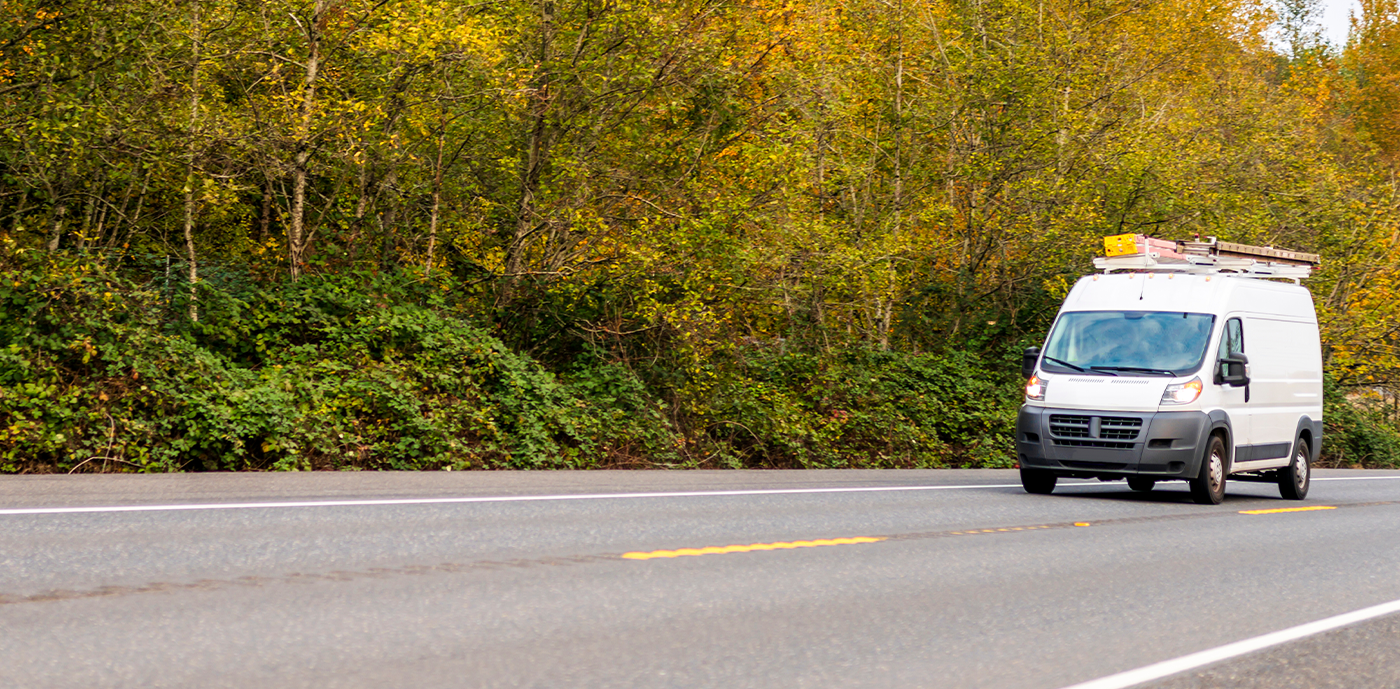
Commercial Auto Insurance
Customized & affordable coverage to protect your business vehicles

A++ Rated Policies*
All policies are underwritten by insurers with A++ ratings* so you can confidently show your customers you have top-rated coverage.

Fast Quotes
Time is money. That’s why we enable our customers to get a quote online or call to speak with one of our experts for a quote in 15 minutes or less.

Premier Service
Based in Omaha, Nebraska, our team of non-commissioned agents is devoted to making commercial auto and property insurance easy for our customers.
What is commercial auto insurance?
Commercial auto insurance, also called business auto insurance or commercial car insurance, is coverage for vehicles used for business purposes. A policy generally includes liability coverage for injuries and property damage you are responsible for. Most policies also include physical damage protection for your own vehicles, and coverage that helps with medical expenses for the people riding in them. You can add other coverages depending on how the vehicle is used.
A traditional personal auto policy generally will not respond when a vehicle is being used for business. A commercial auto policy is built for business use, whether you operate one pickup truck or a small fleet.
Commercial vehicle insurance is what Milepost is built around. We have placed commercial vehicle insurance from Omaha since 2017, and we work with the insurance companies we represent to help make sure the federal and state insurance filings that come with these policies are processed quickly.
Quick answer: the coverages most businesses start with
These coverages appear on most commercial auto policies. Depending on how your vehicles are used, your policy may include others.
- Commercial auto liability: required in nearly every state; helps pay for bodily injury and property damage you are legally responsible for
- Physical damage coverage: collision for accidents, comprehensive for causes of loss like theft, fire, vandalism, and weather
- Uninsured motorist and underinsured motorist (UM/UIM): helps protect you when an at-fault driver has no insurance, or not enough
- Medical payments or Personal Injury Protection (PIP): helps with medical expenses for you and your passengers, no matter who was at fault
- Hired and non-owned auto (HNOA): covers your business's liability for vehicles it uses but does not own, such as a rented van or an employee's own car driven for business purposes
- A certificate of insurance (COI): not a coverage, but the proof of insurance that customers, landlords, brokers, and others often ask for before work begins
Do you need commercial auto insurance?
In most cases, if a vehicle is part of how your business operates. That includes hauling tools or materials, visiting job sites, making deliveries, and carrying passengers for pay, among other business uses.
You will usually need commercial vehicle insurance when any of the following are true:
- The vehicle is titled or registered to your business, not to you personally
- You carry passengers or goods for a fee
- Employees drive the vehicle, whether it is yours or theirs
- A customer, broker, or landlord requires a certificate of insurance naming them
- Your operation needs a USDOT number or state filing to operate legally
If you are not certain whether your vehicle requires a commercial policy, call 1-844-380-6009 during business hours and review how the vehicle is used with one of our non-commissioned agents. It is generally better to confirm coverage before an accident than after one.
Commercial auto vs. personal auto insurance
How a vehicle is used, rather than what type of vehicle it is, generally determines which policy applies. A pickup truck is a common example. The same truck may be covered under a traditional personal auto policy when it is driven personally, and generally needs a commercial auto policy once it is used for business purposes.
Assuming a traditional personal auto insurance policy covers business use is one of the top commercial auto insurance mistakes small business owners make. If a vehicle is used for business, then it generally needs to be covered by a commercial policy.
What kinds of businesses carry commercial auto coverage?
For some businesses, the vehicle is how the company earns its revenue. For others, the vehicle is how employees reach the job site. We place coverage for both, and the coverage conversation differs between them.
Businesses where the vehicle generates the revenue. Trucking companies and owner-operators, package and last-mile delivery, taxis and livery services, limousine and chauffeur services, Uber Black drivers, non-emergency medical transport (NEMT), towing operators, and food trucks, among others. For many of these operations, coverage, insurance filings, and certificates are a routine concern, and time out of service can be costly.
Trades and service businesses where the vehicle reaches the job site. Contractors, electricians, plumbers, HVAC, landscapers and lawn care, and farm operations, among others. Here the vehicle policy is one of several coverages the business carries, and the conversation usually begins with general liability, the equipment carried in the vehicle, and workers' compensation for the crew. Commercial auto often receives the least attention of these coverages, even though a work truck may be on the road every day. That combination is one reason a commercial auto claim can catch an owner off guard.
In either case, our non-commissioned agents in Omaha can review which coverages your operation needs and which it does not.
What vehicles can be covered on a commercial auto policy?
We place coverage on a wide range of company vehicles, including pickup trucks, cargo vans, passenger vans, box trucks, dump trucks, tow trucks, semi-trucks and tractors, SUVs, and sedans, among other vehicle types. The right coverage depends on how each vehicle is used.
For most businesses, we can quote these vehicles in about 15 minutes. If you operate a vehicle type not listed here, call 1-844-380-6009 during business hours and one of our agents can tell you whether that vehicle type is eligible.
What coverages are available on a commercial auto policy?
Operations vary widely, though most policies begin with the same core coverages. The coverages below are among the most common. From there, a business adds coverages that fit how its vehicles are used, and other coverage options may be available depending on the operation.
- Liability coverage helps pay for bodily injury and property damage you are legally responsible for after an at-fault accident, along with related legal fees. Nearly every state sets a minimum limit.
- Collision coverage helps repair or replace your vehicle after a crash, regardless of who was at fault.
- Comprehensive coverage helps with causes of loss like theft, fire, vandalism, falling objects, and weather damage.
- Uninsured/underinsured motorist coverage helps protect you when the at-fault driver has no insurance, or not enough to cover the injuries.
- Medical payments or PIP helps pay medical expenses for you and your passengers after an accident, regardless of fault.
- Hired and non-owned auto insurance (HNOA) covers your business's liability for vehicles it uses but does not own, such as a rented van or an employee running an errand in their own car. It generally does not repair the employee's own vehicle; that is a question for their personal policy.
Your lender may also require specific physical damage coverage if a vehicle is financed. Many businesses pair their auto policy with other business insurance, such as general liability, business property, or workers' compensation. General liability and business property are often combined into a business owner's policy (BOP); workers' compensation and commercial auto are often separate policies. Call 1-844-380-6009 during business hours and an agent in Omaha can review which of these coverages your operation needs.
How much does commercial auto insurance cost?
There is no single price for commercial auto insurance, because operations vary widely in how their vehicles are used. We quote each business individually.
What affects your commercial auto insurance premium
Among the factors insurance companies weigh most:
- Vehicle type and value. A sedan, a cargo van, and a semi-truck each cost different amounts to repair and replace. Higher repair costs generally mean a higher premium on the physical damage coverage.
- How the vehicle is used. Local job-site work, long-haul routes, and carrying passengers for hire are each priced differently.
- Number of vehicles. A single work vehicle and a ten-vehicle fleet are quoted differently.
- Driving records and claims history. Insurance companies generally review motor vehicle records (MVRs) for the drivers on your policy. A clean driving history usually earns a better rate.
- Coverage limits and deductibles. Higher liability limits generally cost more, and a higher deductible usually lowers your premium while increasing what you pay at claim time.
- Where you are based and where you operate. Your garaging location and radius of operation both factor in.
- Safety technology and compliance. Telematics, electronic logging devices (ELDs), and dash cameras can help lower a premium in some cases, and safety or compliance issues recorded on your USDOT number can work against you.
How to lower your commercial auto insurance cost
The steps below usually help, though how much each one affects your premium depends on your operation.
- Keep driver records clean. Motor vehicle records and loss history are among the factors insurance companies watch most closely over time.
- List every vehicle and driver. An unlisted vehicle or driver is a common reason a claim is delayed or disputed.
- Ask about the ELD discount. The insurance companies we represent offer a premium discount for approved electronic logging devices.
- Consider a higher deductible if your business keeps enough cash on hand to pay the larger deductible amount when a claim occurs.
- Right-size your coverage. Carry the coverages your operation uses, and skip what it does not need, such as a workers' compensation policy if you have no employees. Purchasing enough coverage is also critically important. For example, we usually suggest carrying at least $1 million in auto liability even when your state or your contracts require less, because a single serious injury can exceed a lower limit. That choice can cost more up front, and we still recommend it.
What are the commercial auto insurance requirements?
Requirements usually come from a few places, and most businesses answer to more than one:
- Your state. Nearly every state sets a minimum liability limit for commercial vehicles, and the required limits vary widely from state to state. Some states also set minimums that differ by business type or vehicle type.
- Federal rules. Interstate for-hire motor carriers generally fall under FMCSA requirements. For most carriers hauling non-hazardous freight in vehicles at 10,001 pounds GVWR or more, the federal minimum is $750,000 in public liability. It rises to $1 million for certain hazardous materials, and to $5 million for specified high-hazard commodities such as bulk explosives, poison gas, and highway route-controlled quantities of radioactive material. The hazardous materials tiers can also apply to private carriers. Passenger carriers have their own limit criteria and amounts.
- Your contracts. Brokers, shippers, and commercial customers often require $1 million in liability before they will work with you, which is commonly well above the state minimum.
- Your lender or lessor. If a vehicle is financed or leased, the lienholder generally requires physical damage coverage and asks to be listed on the policy.
Your BMC-91, BMC-91X, state Form E, and Ohio OS-32 filings are made by the insurance company, typically within 24 hours of policy approval. We work with them to help make sure your filings are processed on time.
Learn more about insurance filings →
Why businesses choose Milepost Insurance Agency
- A Berkshire company. Milepost is a licensed insurance agency placing commercial vehicle insurance. The insurance companies we represent are rated A++ (Superior)* by A.M. Best, the highest financial-strength rating an insurance company can hold.
- Non-commissioned agents. Because our agents are not paid on commission, the coverage we recommend is the coverage that fits your operation.
- Filings and certificates. Your federal and state insurance filings are made by the insurance company, typically within 24 hours of policy approval, and we work with them to help make sure yours are processed on time. The insurance companies we represent also lets you generate a certificate of insurance online, 24/7.
- Quote and purchase online. Many customers complete a quote and purchase coverage in a single online session, without speaking with us first. You can also call 1-844-380-6009 during business hours.
- Commercial insurance is what we do. Milepost places commercial vehicle and commercial property insurance. We do not offer traditional personal auto insurance or pay-per-mile insurance.
Frequently asked questions (FAQ) about commercial auto insurance
-
What's the difference between personal and commercial auto insurance?
Commercial auto insurance covers vehicles used for business purposes; traditional personal auto insurance does not. A traditional personal auto policy usually will not respond to an accident that happens while you are working, and the claim can be denied as a result.
-
Do I need commercial auto insurance for a single vehicle?
Yes, in most cases, if the vehicle is used for business purposes, even part-time, you will generally need commercial coverage. The number of vehicles matters less than how they are used.
-
Does commercial auto insurance cover personal use?
Often, yes, though it depends on how the policy is written and who is driving. Personal use by an approved driver can usually be included. Tell your agent how the vehicle is used so the policy matches.
-
Can I get coverage for employees who drive their own cars?
Yes, in most cases. Hired and non-owned auto insurance (HNOA) covers your business's liability when an employee drives their own car for business purposes. Be clear about every vehicle that could be driven for business so your quote is accurate.
-
Is commercial auto insurance more expensive than traditional personal auto insurance?
Usually, yes. Business vehicles are typically on the road more, carry higher liability limits, and often haul goods or passengers, so insurance companies often price them higher. What you pay depends on factors like your vehicles, your drivers, and the coverage you select, among others.
-
How do I get a certificate of insurance for my vehicles?
The insurance companies we represent let you generate certificates of insurance online, 24/7, so you can meet a customer's requirement without waiting on paperwork. You can also call us during business hours and an agent can prepare the certificate for you.
-
What information do I need to get a quote?
For an accurate quote, have the year, make, and model of each vehicle, along with how each one is used, driver information for everyone who drives, and your business type and location. Depending on your operation, an agent may ask for a few other details. A VIN is not required to get accurate pricing, and skipping the VIN keeps the process moving when you are quoting several vehicles at once.
-
Can I get other business insurance through Milepost?
In most cases, yes. General liability, business property, and workers' compensation are often separate policies rather than additions to your auto policy, and we can help you review them alongside your commercial auto coverage. Our agents can tell you which of these policies your operation needs.
-
How fast can I purchase coverage?
Often the same day. Many customers get a quote and purchase coverage online in a single session, without speaking with us first. You can also call 1-844-380-6009 during business hours and an agent can tell you what is needed to complete your purchase.

Get a quote today
Get started on a custom commercial auto quote online, or call 1(844)380.6009 to speak with one of our friendly insurance agents during office hours: Mon-Fri 8am-5pm CT